Game Design - Team Lead - Client Project

Abenteuer auf Burg Haselnuss

Abenteuer auf Burg Haselnuss is an interactive audio memory card game for children and families. Players follow Siggi through a magical castle and find matching card pairs that can be used as items within the story.

The project was created as an interdisciplinary university project in collaboration with EarReality GmbH and was built around their existing IP “Der Zauberwald”.

  • Game Design
  • Team lead
  • Client communication
  • Paper Prototyping
  • Concept
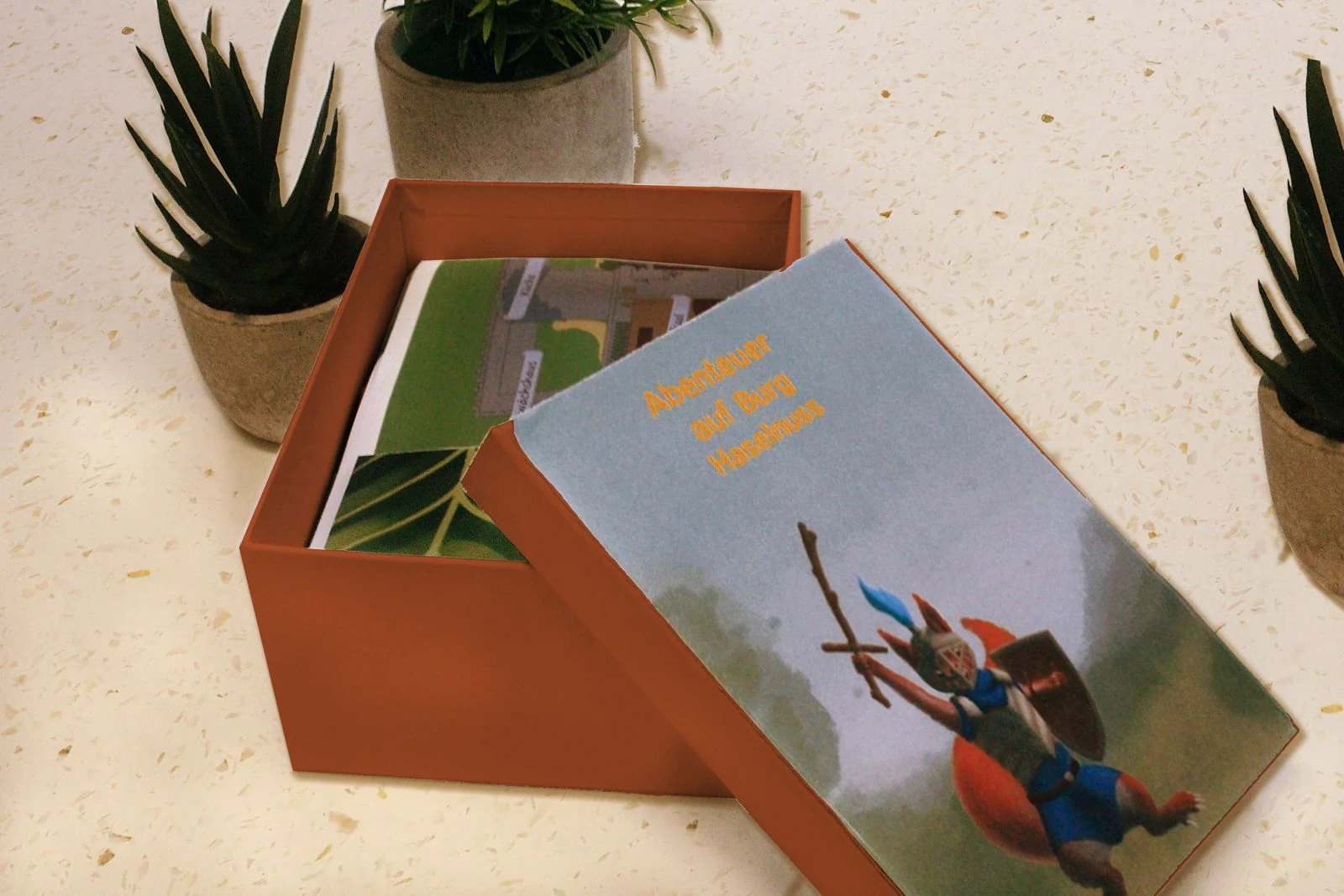
Game box and materials from Abenteuer auf Burg Haselnuss
Physical prototype of the project. Photo and image editing: Maria Mikolajtschuk.
Project type Interactive audio memory game
Context University project with an external client
Target audience Children aged 6 to 12 and families
Result Physical paper prototype
My role Lead, story and game design

Project process

From brief to delivery

01 Brief

Starting from an existing IP

The client gave us full access to the story IP “Der Zauberwald” and asked us to develop an interactive audio game for children from it.

The concept had to work both solo and with multiple players, encourage replaying and be suitable for a possible later implementation with EarReality’s TWIST engine.

02 Concept

From an open brief to a memory game

Our first goal was to understand the client’s requirements and wishes more clearly and figure out which direction would work best for further development. Several early concepts were discarded because they did not meet the requirements well enough or did not convince the client.

To bring new ideas together, we ran a mini game jam within the team and then combined the strongest concepts. A memory-game concept I suggested became the basis for the next version. We developed it further together and then presented it to the client.

03 Prototyping

Make the rules playable early

We then built the mechanics as a physical paper prototype. This allowed us to test and improve card rules, item use, room changes and different gameplay flows early on.

Besides internal tests, the prototype was also tested with children from the target group. The core idea worked well, but it also became clear that they wanted a more detailed story. That feedback went directly into the next iteration.

04 Delivery

From test setup to a fleshed-out concept

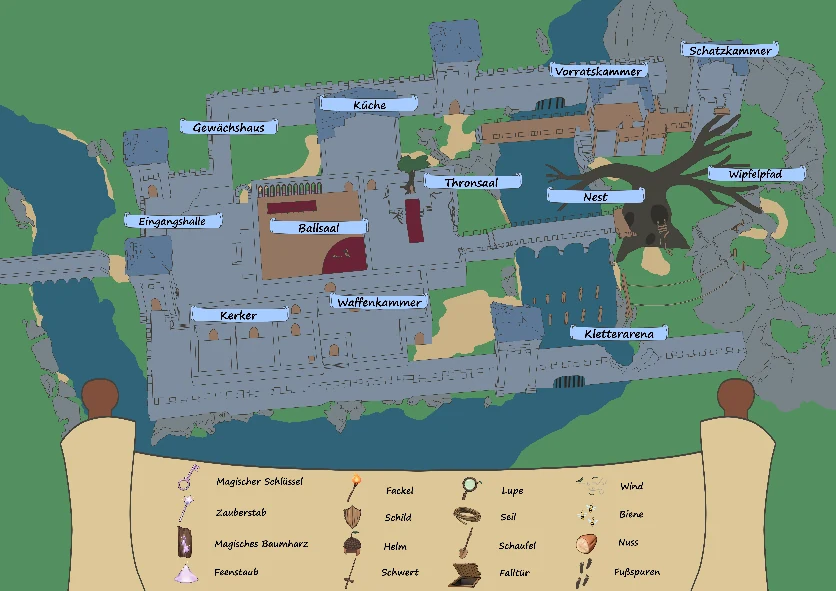
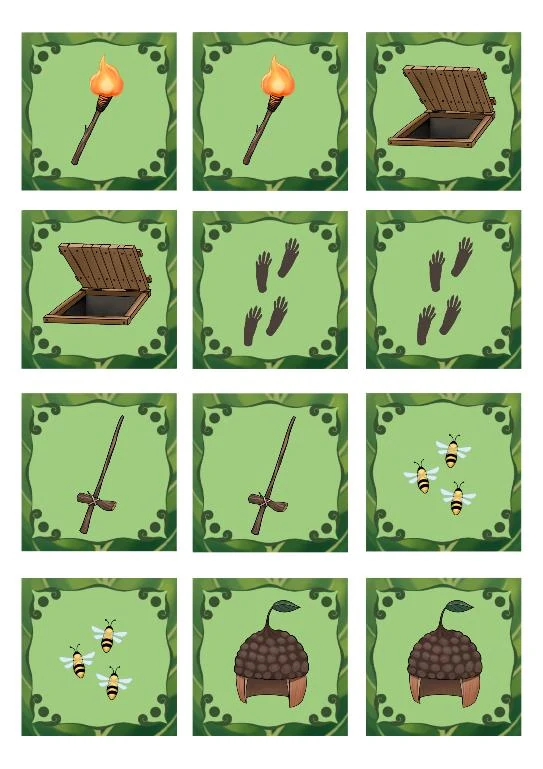
For the final delivery, we created a complete physical prototype with memory cards, a castle map, a position token, and a fully developed room, item and story structure.

The concept included twelve connected rooms and 16 different card pairs. The prototype was then planned to be presented at the Nuremberg Toy Fair to gauge interest in a possible continuation of the project.

Paper prototype

The final result

The prototype represented the central elements of the game concept physically: memory cards, item use, room changes, the castle map and a position token. Audio integration was not part of our project scope.

Team & contributions

Developed together

Concept, story, game design, mechanics, rooms and items were developed mostly through collaboration. Everyone brought in ideas, developed them further in team meetings and took on different areas of focus during production.

  • Anthony John Haleck: Team lead, client communication and coordination, plus concept work, paper prototyping, playtests and dev log
  • Alex Schwarz: Focus on designing and producing the memory cards as well as additional visual work
  • Marc Sauerbier: Focus on the detailed room, item and event structure and preparing it for a possible later technical implementation
  • Moritz Zaum: Introduced the castle as the setting and focused on the castle map and illustrations
  • Mirjam Stretz: Extensive work on concept, story, characters, mechanics and level design, with a focus on documentation and the Game Design Document
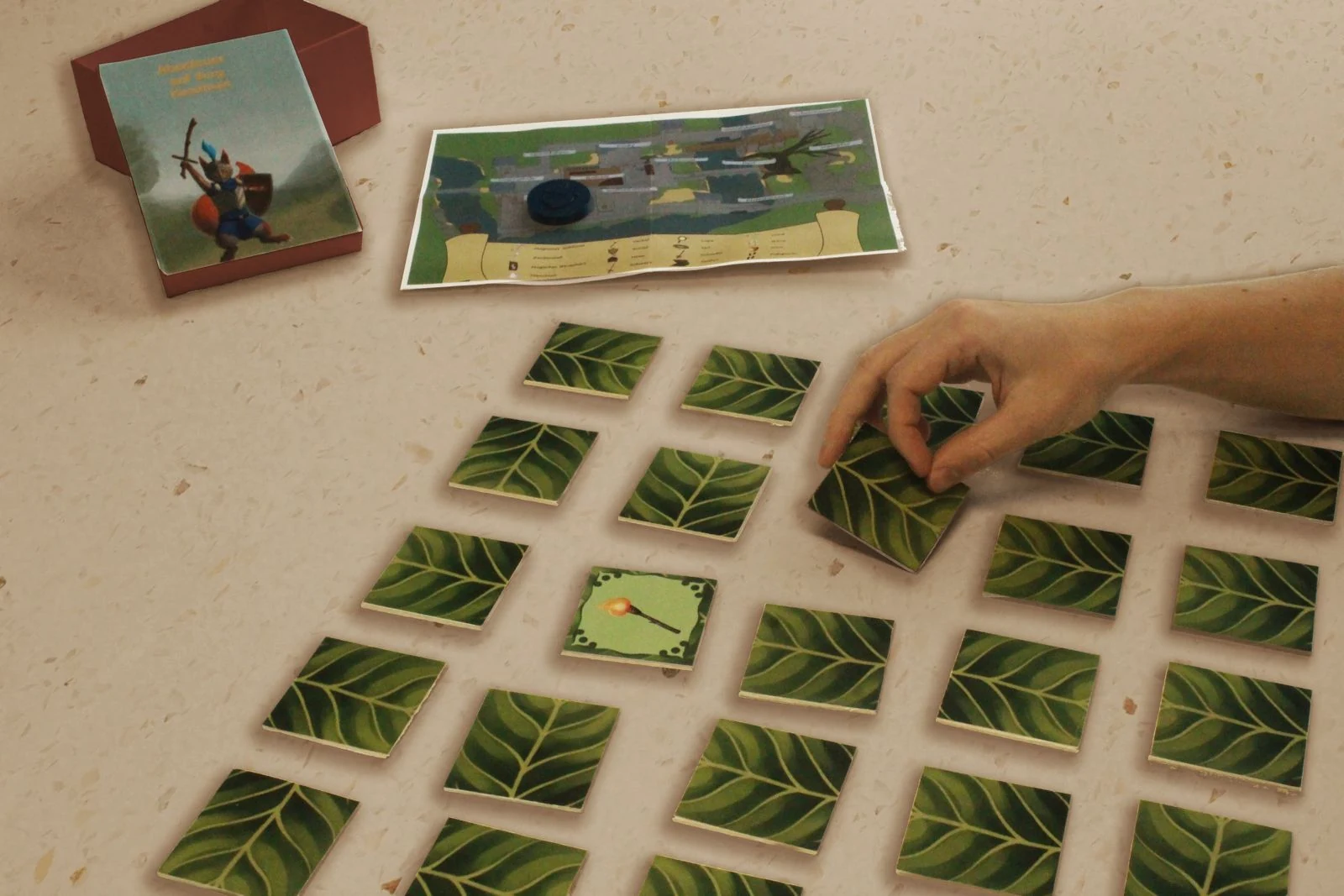
Playtest of the Abenteuer auf Burg Haselnuss paper prototype
The image shows a playtest of the paper prototype without audio integration. Photo and image editing: Maria Mikolajtschuk.

The game

Memory pairs become part of the story

The familiar memory mechanic forms the physical core. The objects players find only gain their actual function through the audio story.

Players follow Siggi through Burg Haselnuss. Each room presents a new challenge where an item from Baumwart’s magic box may be useful.

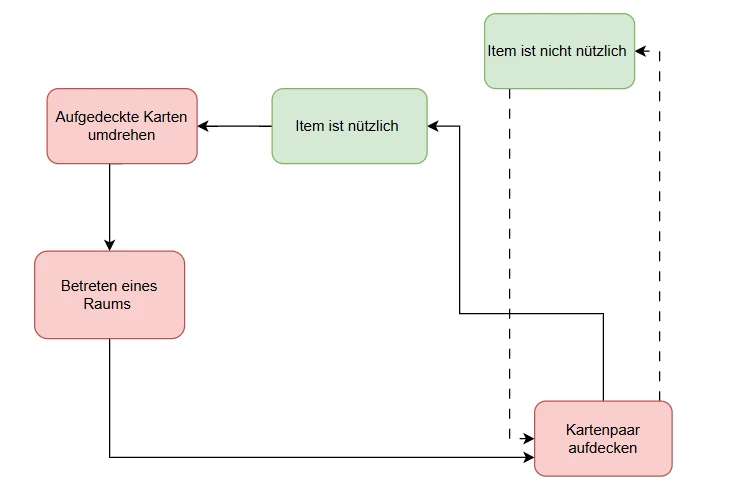
The items are placed face down as matching pairs. When a pair is found, the players can decide whether that item should be used in the current situation.

  • The audio story leads into a room.
  • Two face-down cards are revealed.
  • A found pair can be used as an item.
  • The right item allows the story to progress.
  • The wrong item triggers an audio reaction but does not move the story forward.
  • When moving into a new room, revealed cards are turned face down again.
Diagram of the Abenteuer auf Burg Haselnuss core gameplay loop
Documented core loop from the concept phase.

My contribution

Lead, communication and game design

I took on the team lead role and a large part of the communication with the client and the people involved at EarReality.

At the same time, I worked directly on the game concept, the mechanics and parts of the story and room structure.

  • Coordination of tasks and team progress
  • Client communication and regular video calls
  • Concept development and mechanic design
  • Design and testing of rooms, items and their arrangement
  • Work on characters and story
  • Paper prototyping and playtests
  • Documenting progress through a weekly dev log

Reflection

What I took away from the project

Beyond the game design itself, the project taught me a lot about turning a client’s requirements into a concrete product as a team.

Make requirements concrete

The first discarded concepts showed how important it is to turn requirements into clear design goals and testable decisions early on.

Make it playable early

The paper prototype helped make problems in the rules and game flow visible early, before more work went into fleshing everything out.

Centralize communication

Information from meetings, chats and different boards should come together in one clear project source wherever possible, so decisions and responsibilities stay visible to everyone.

Next project

Die heiligen Kartoffelritter

An original story IP with choices, state variables and branching scenes for an interactive audio format.

Open project